Managing Teething: Tools and Tricks for Fussy Babies
Key Points
Teething typically begins between 4–7 months and follows a gradual timeline, with most children having all 20 primary teeth by age 3. Knowing the stages helps parents anticipate changes and manage expectations.
Recognizing common signs of teething—such as drooling, gum sensitivity, irritability, chewing, or disrupted sleep—can help parents provide comfort while avoiding confusion with unrelated illnesses like ear infections or high fevers.
Safe and effective teething remedies include chilled (not frozen) teethers, gum massage, BPA-free silicone or wooden toys, drool management with absorbent bandana bibs, and distraction through play or extra comfort.
Parents should avoid unsafe teething remedies such as benzocaine gels, amber teething necklaces, frozen objects, or unregulated homeopathic tablets, which carry risks and no proven benefits.
While teething discomfort often disrupts sleep, maintaining consistent calming routines, offering comfort, and consulting a pediatrician for safe pain relief when necessary can help babies and parents rest easier.
Teething is one of those milestones that feels both exciting and exhausting for parents. As your baby’s first teeth begin to emerge, many little ones experience discomfort, disrupted sleep, and extra fussiness. While teething is a normal stage of development, knowing how to soothe your baby safely can make all the difference.
In this guide, we’ll walk you through everything you need to know: teething symptoms, safe remedies, common myths, and trusted tools to help your little one through this stage.
When Does Teething Start?
Most babies begin teething between 4-7 months old, though some may start as early as 3 months or as late as 12 months. Every baby is unique!
Here’s a general teething timeline:
|
Age |
Typical Teeth Appearing |
|
6-10 months |
Bottom front (lower central incisors) |
|
8-12 months |
Top front (upper central incisors) |
|
9-16 months |
Top and bottom lateral incisors |
|
13-19 months |
First molars |
|
16-23 months |
Canines |
|
23-33 months |
Second molars |
By around age 3, most children will have their full set of 20 primary (baby) teeth.
Teething is just one of many exciting baby milestones happening during your baby’s first year.

Common Signs of Teething
While not all babies experience discomfort, these are some typical signs of teething:
-
Drooling (sometimes a lot!)
-
Chewing or gnawing on hands, toys, or anything nearby
-
Swollen or sensitive gums
-
Irritability or fussiness
-
Changes in eating or sleeping patterns
-
Rubbing cheeks or tugging ears
-
Mild temperature elevation (low-grade, under 100.4°F)
Teething Symptoms: Myths vs Facts
Parents often worry that teething may cause illness, but most health experts agree:
Teething Does NOT Cause:
-
High fevers (over 100.4°F)
-
Severe diarrhea
-
Vomiting
-
Ear infections
-
Cough or congestion
These symptoms may appear around the same time but are not directly caused by teething. Always contact your pediatrician if your baby shows these signs.
Safe & Effective Teething Remedies
1. Cold Comfort
-
Chilled (not frozen) teething rings
-
Cold, damp washcloths for baby to chew
-
Chilled purees or breastmilk popsicles (if your baby has started solids)
-
Cold metal spoons under close supervision
2. Teething Toys
-
BPA-free silicone teethers
-
Textured teethers for added gum massage
-
Smooth wooden teethers (ensure non-toxic, splinter-free materials)
3. Gum Massage
-
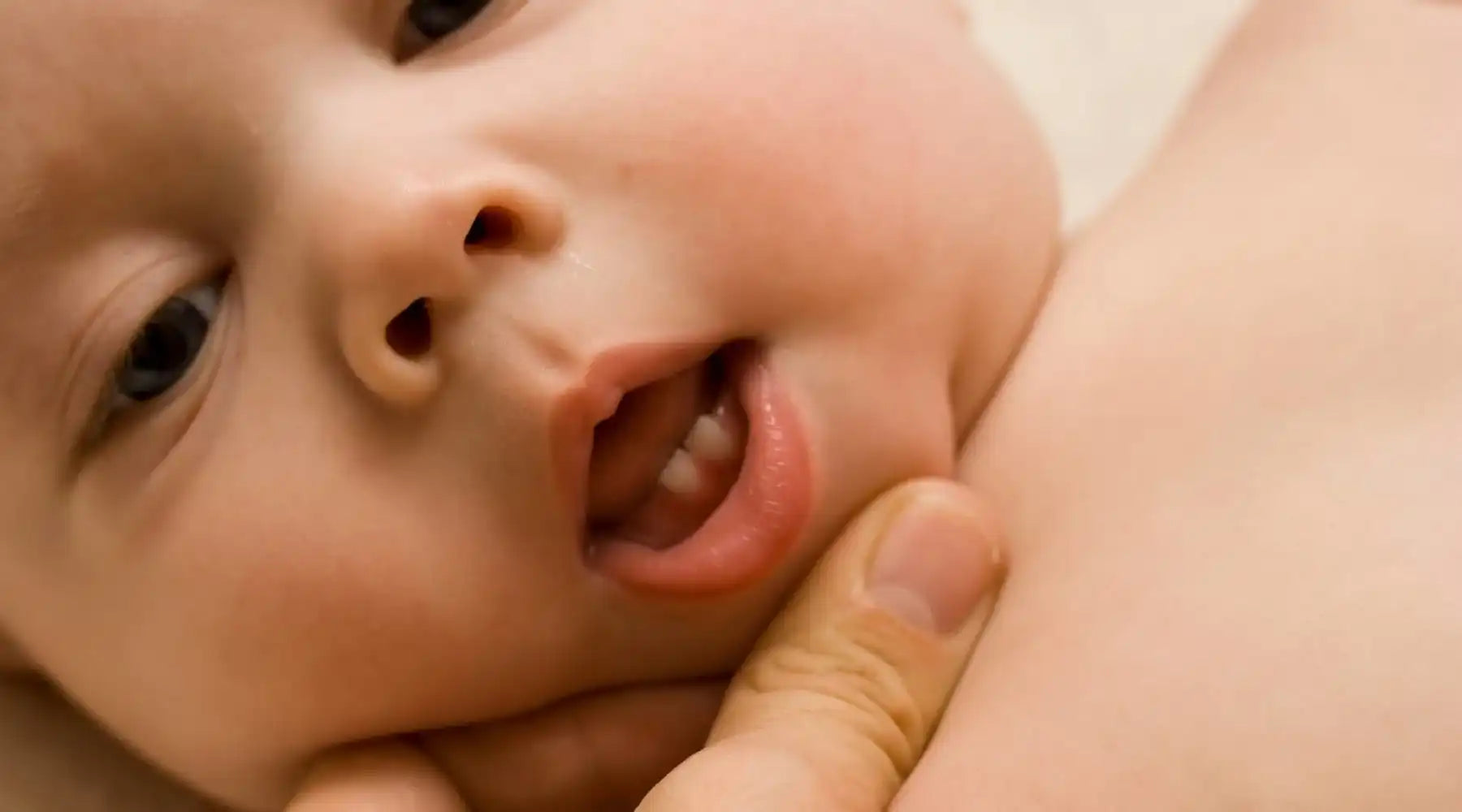
Gently rub your baby’s gums with a clean finger or soft baby toothbrush to apply light pressure and ease discomfort.
4. Drool Management
-
Excess drool is common and can cause skin irritation.
-
Keep your baby dry with soft, absorbent bibs. Our bandana bibs are both practical and stylish for managing drool while keeping outfits dry.
-
Change damp clothing often to prevent rashes.
5. Comfort & Distraction
-
Extra snuggles, rocking, or babywearing can provide comfort.
-
Singing songs, playing peek-a-boo, or going for a stroller walk can gently distract your baby.
-
Consistent bedtime routines can also help settle them during fussy nights.
For more tips on soothing nighttime disruptions, check out our guide on Surviving Sleepless Nights: Tips for Newborn Sleep Success.
6. Pain Relief (If Needed)
-
Infant acetaminophen (Tylenol) or ibuprofen (Motrin) may be helpful under pediatrician guidance.
-
Always follow dosage instructions carefully and consult your doctor before giving medication.
Teething Remedies to Avoid
While some remedies are still popular among parents, many are no longer considered safe:
-
Benzocaine-containing gels (numbing agents): Can cause serious health risks (FDA warning).
-
Amber teething necklaces: No proven benefit and pose choking/strangulation risks.
-
Frozen objects: Hard frozen items may damage delicate gums.
-
Homeopathic teething tablets: Not FDA-regulated; some recalled due to inconsistent ingredients.
Always prioritize safe, evidence-based remedies recommended by pediatricians.

How Long Does Teething Last?
Each new tooth typically causes discomfort for a few days as it breaks through. However, since teething occurs in stages over months or years, many babies go through multiple bouts of discomfort during early childhood.
Does Teething Affect Sleep?
Yes — teething discomfort often leads to temporary sleep disruptions. Your baby may wake more frequently, want extra comfort, or seem restless.
-
Stick to consistent calming routines.
-
Offer extra cuddles, rocking, or pacifiers as needed.
-
Avoid introducing new sleep habits you’ll have to undo later.
When to Call Your Pediatrician
While teething discomfort is normal, call your doctor if your baby has:
-
A fever over 100.4°F
-
Severe diarrhea or vomiting
-
Refusal to eat or drink
-
Inconsolable crying
-
Rash beyond drool irritation
-
No teeth by 15-18 months
Helpful Products to Have On Hand
-
BPA-free silicone or wooden teethers
-
Soft, absorbent bandana bibs to manage drool
-
Cozy baby blankets for extra comfort during fussy periods
-
Soft baby toothbrush or finger brush for gum massage
-
Wet a wash cloth and place in the freezer to allow baby to chew it once frozen
-
Diaper caddies to keep teething toys, bibs, and medications organized
Teething FAQs
When does teething start?
Typically between 4-7 months, but timing varies.
How long does teething last?
Each tooth may cause discomfort for a few days, but teething overall can last months or years as new teeth emerge.
How can I soothe my teething baby?
Cold teethers, gum massage, drool management, distraction, and (when necessary) safe pain relief under pediatrician guidance.
Are teething gels safe?
No. Numbing gels containing benzocaine or lidocaine are not safe for infants.
Do amber teething necklaces work?
There is no scientific evidence they help, and they carry safety risks.
Can teething cause a fever?
Teething may slightly raise body temperature but does not cause true fevers over 100.4°F.
When should I worry about delayed teething?
If no teeth appear by 15-18 months, speak with your pediatrician.
Final Encouragement
While teething can feel like a long season for both babies and parents, rest assured: it is temporary. With a combination of safe remedies, comfort, and patience, your little one will make it through this important milestone — one tiny tooth at a time.